A Lighthearted Yet Serious Reality
Assalam-o-Alaikum, brothers and sisters!
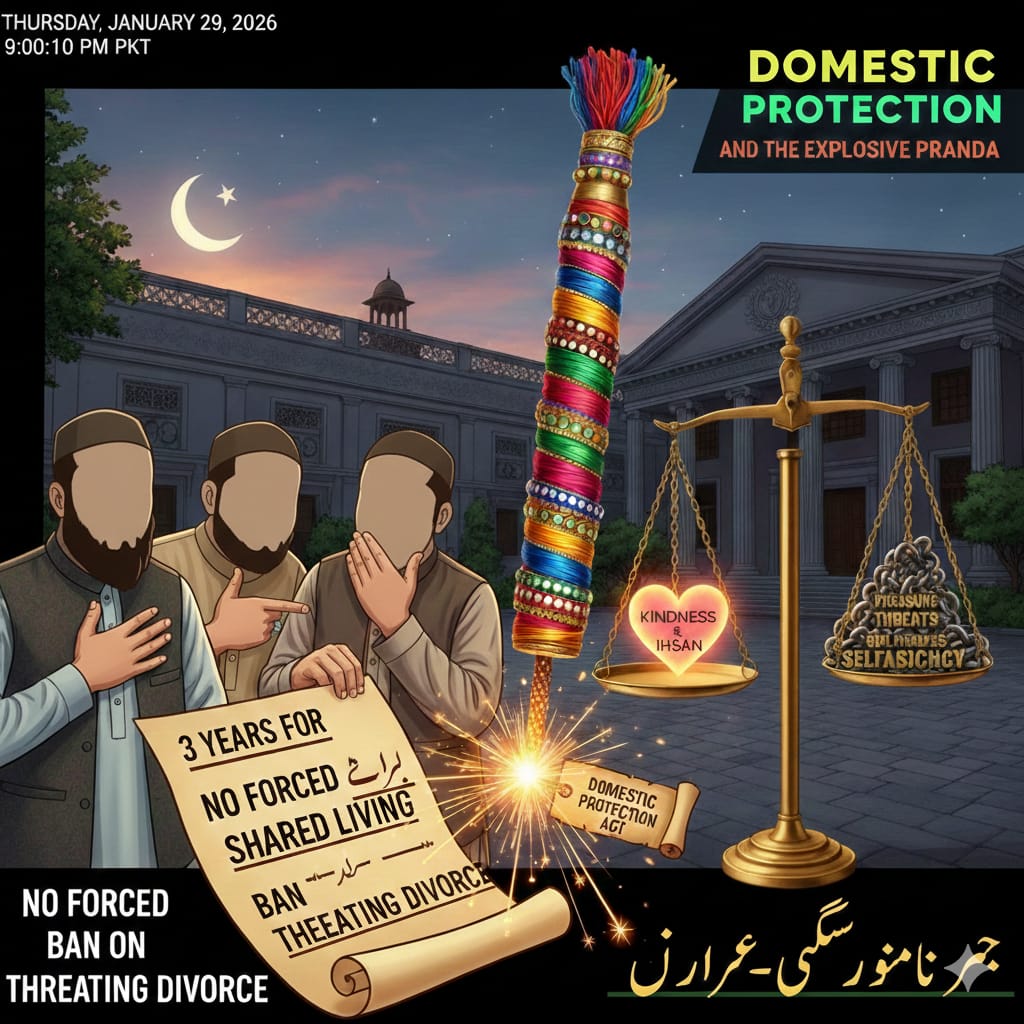
The new Domestic Protection Act has stirred discussion, debate, and some eyebrow-raising reactions among male intellectuals. The law covers:
- Glaring at one’s wife could lead to imprisonment.
- A daughter-in-law cannot be forced to live with in-laws or co-wives.
- Threatening a second marriage or divorce is punishable.
- Courts can order medical expenses to be paid before a final verdict in abuse cases.
At first, some asked, “Is this a new version of Islam?” The reality is that the Act enforces rights that Islam already granted—but which society often ignored.
The Phone Check and “Male Security”
Some men consider checking their wife’s phone a natural right—a “security check.” Ironically, these same men often hide secrets on their own devices. The law challenges this habit, emphasizing trust over control.
Threats of Divorce or Second Marriage
Using polygamy or divorce as threats is culturally normalized as “romantic banter,” but the Quran and Sunnah discourage mockery of Allah’s commands. The Act helps prevent psychological abuse under the guise of marital rights.
Living with In-laws and Co-wives
Historically, wives had separate accommodations in the Prophet’s (PBUH) household. The Act reinforces a woman’s right to live with dignity—without being forced into crowded or oppressive households.
Insults, Taunts, and the Language of Love
Verbal abuse in marriage—insulting fertility, mental health, or parents—is often dismissed as humor. The Quran instructs: “Speak a good word or remain silent” (An-Nisa: 19). The law supports this divine principle.
Medical Expenses Before Conviction
One notable clause allows courts to order medical expenses paid immediately after abuse. Critics call it “blackmail,” but it protects victims and holds perpetrators accountable.
Real Significance: Beyond Law
Islam gave women rights, respect, and protection, but societal customs often masked oppression as “patience.” This Act exposes hidden injustices, reminding men that true Qawamiyat (leadership) comes from responsibility and excellence, not force or intimidation.
Conclusion: Practicing Kindness and Justice
- A balanced marriage requires rights and duties fulfilled on both sides.
- Patience and kindness are practical, not excuses for oppression.
- Laws like the Domestic Protection Act reinforce justice already present in Islam.